YOGYAKARTA, INDONESIA – A couple weeks ago we paid a visit to Borobudur, the world’s largest Buddhist temple, and a UNESCO World Heritage Site since 1991.
But apparently, they’re still building it…
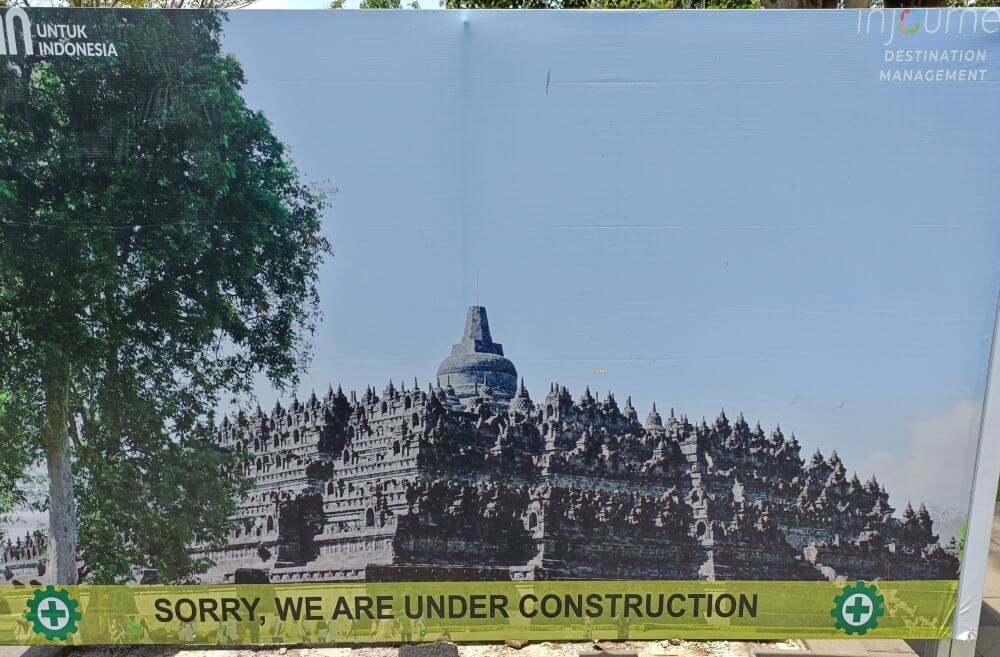
Just kidding…
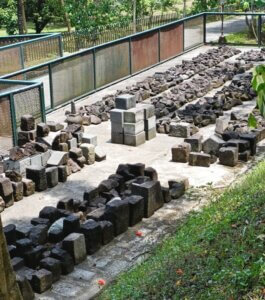
Maintenance and restoration projects are ongoing at Borobudur, thus the ‘construction’ signs we saw along some of the pathways. And the fenced yards filled with assorted carved and broken stones.
Built long ago, lost and refound
Located in Central Java, Indonesia’s most populous island, the temple complex was built during the 8th and 9th centuries, abandoned around the 14th century, and ‘rediscovered’ under layers of volcanic ash and jungle growth early in the 19th century.
It was just a few weeks before our trip that I discovered exactly how huge the complex is. Previously, I had only ever seen a few photos taken among the stupas on the upper levels.
Even that small segment was impressive enough to make me want to go there.
I hadn’t known what to expect
But when I finally sat down to work out the details of our trip and saw a photo showing the entire complex from a distance I was amazed.
A few weeks later, when at last we arrived at the actual site… the word ‘awestruck’ came immediately to mind.
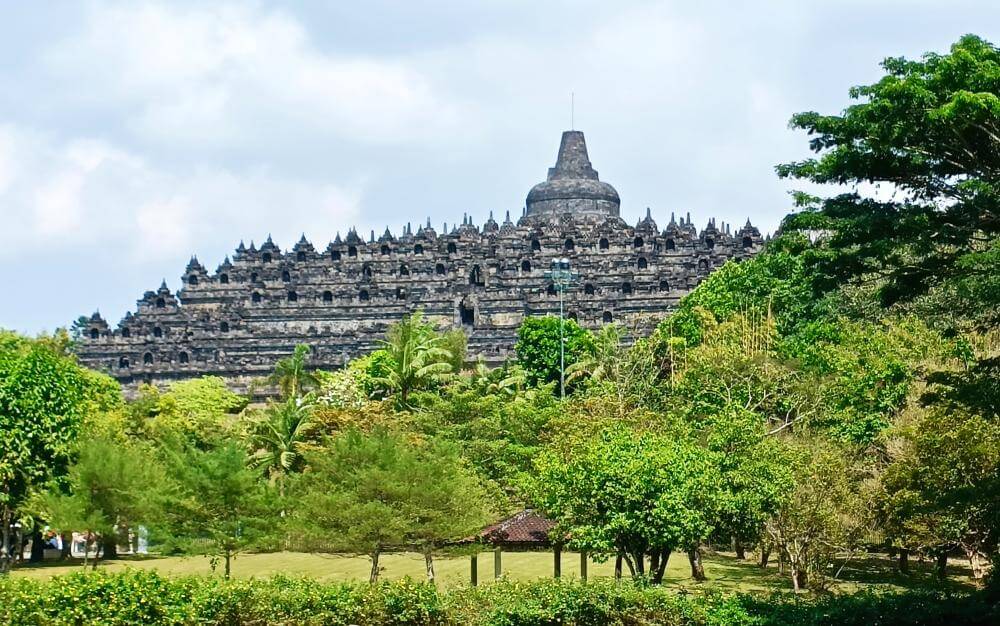
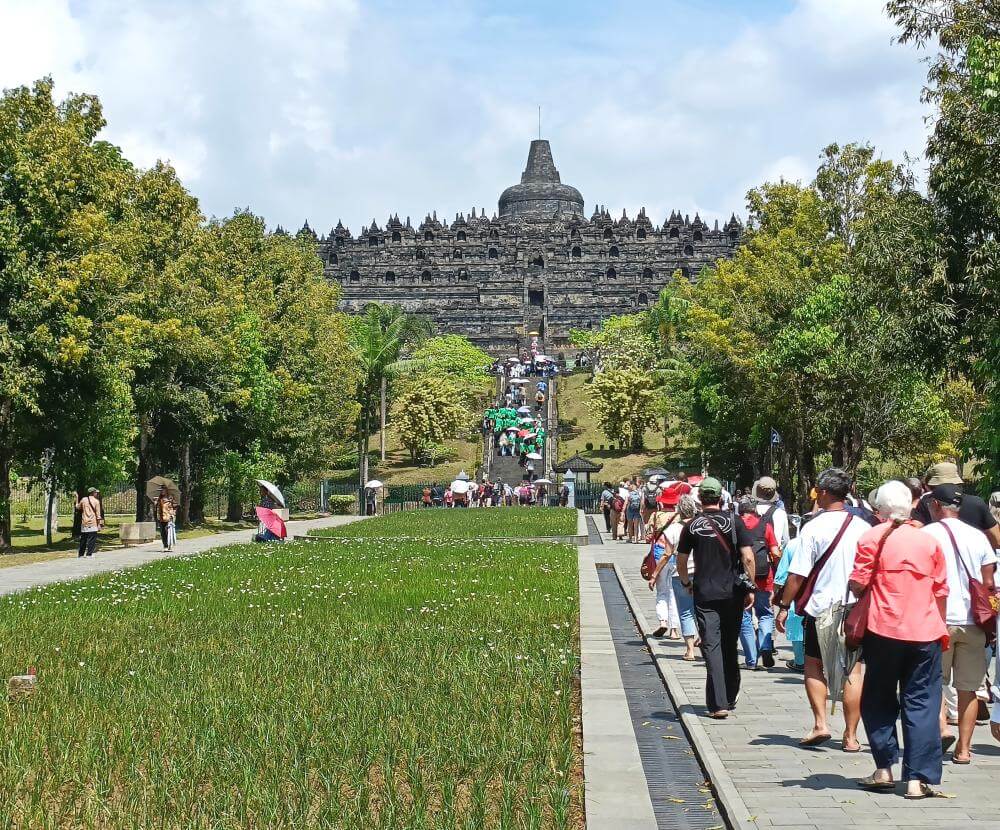
The temple complex is huge, covering some 14,000 square meters. The stone structure is surrounded by a buffer zone about five times that size. And the park grounds stretch far beyond that.
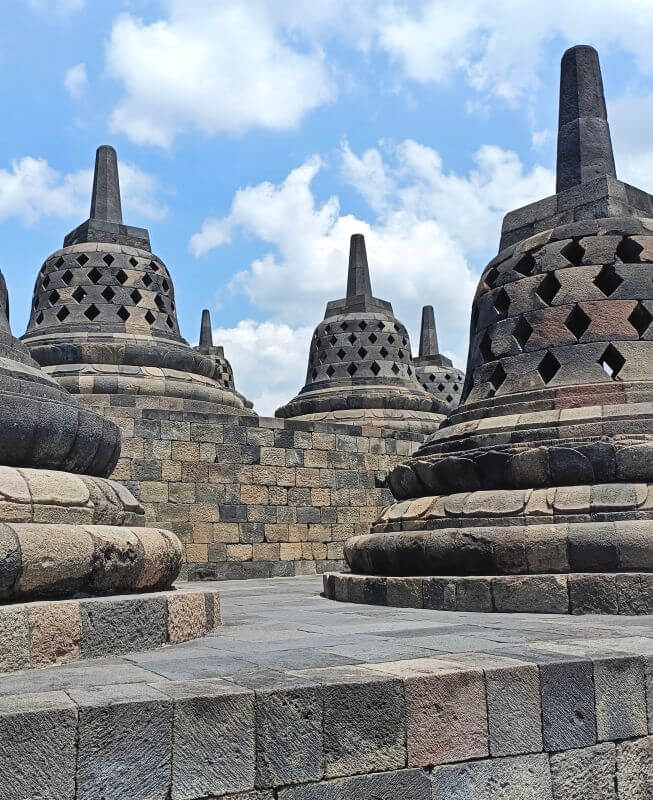
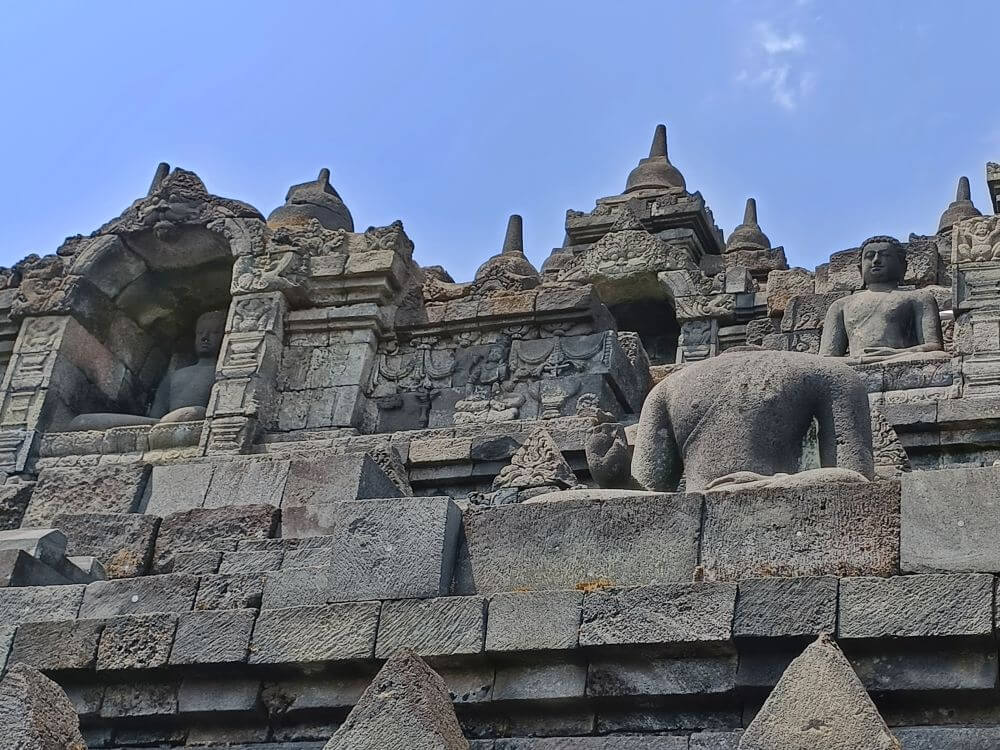
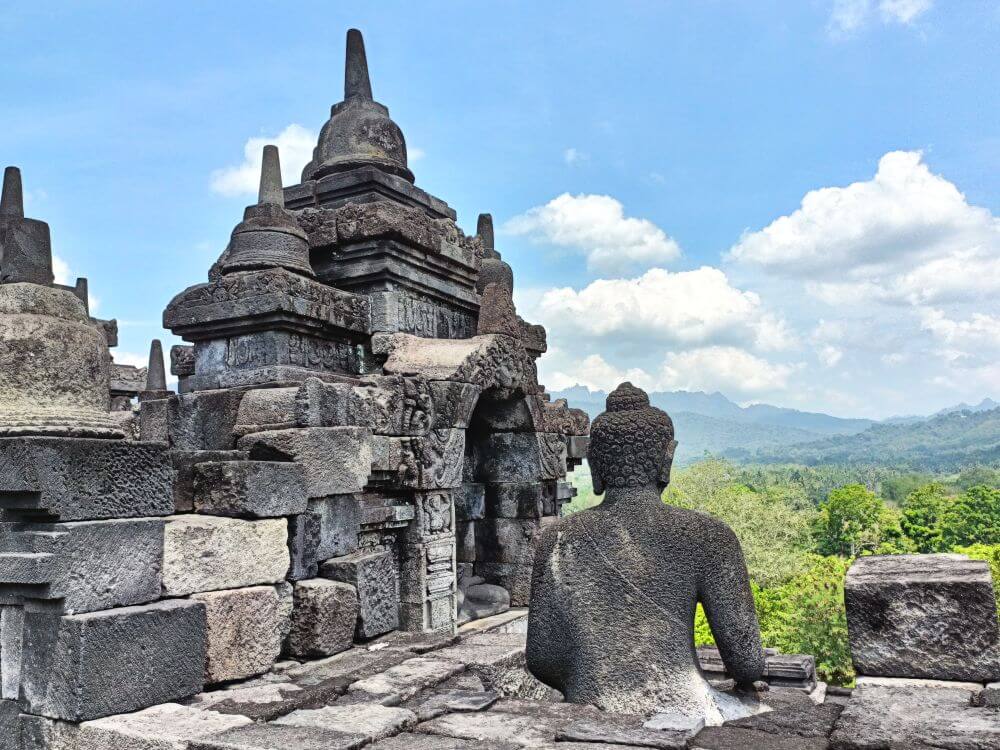
The temple includes nine stacked platforms, six square and three circular, topped by a central dome. Some 72 Buddha statues, each seated inside a perforated stupa, surround the dome.

Art is everywhere within the temple complex
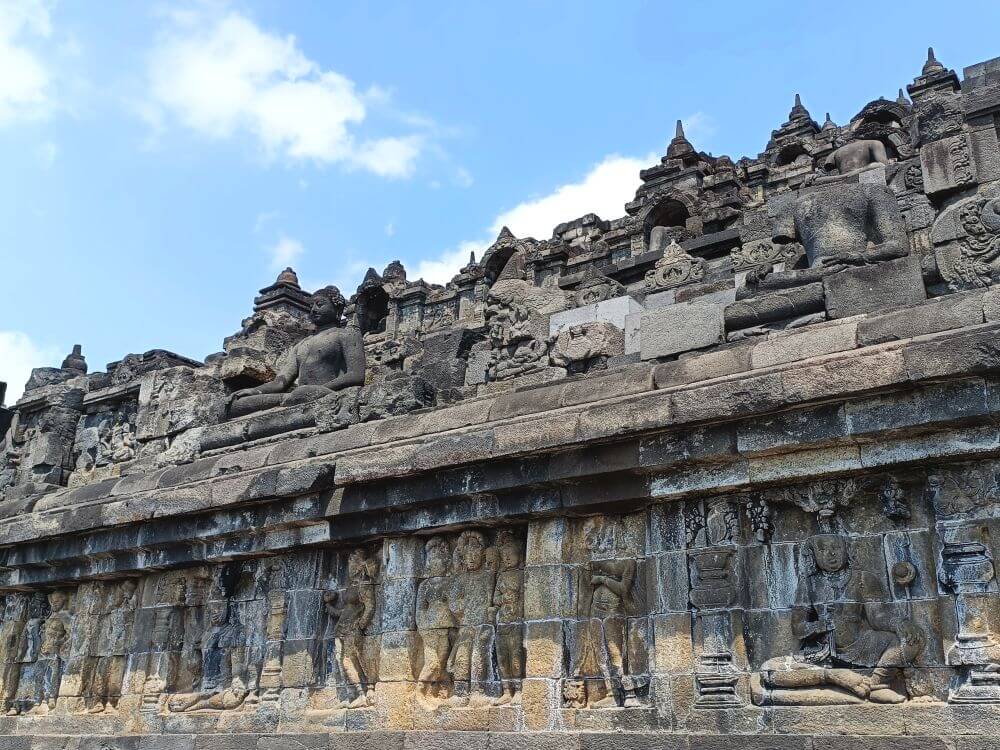
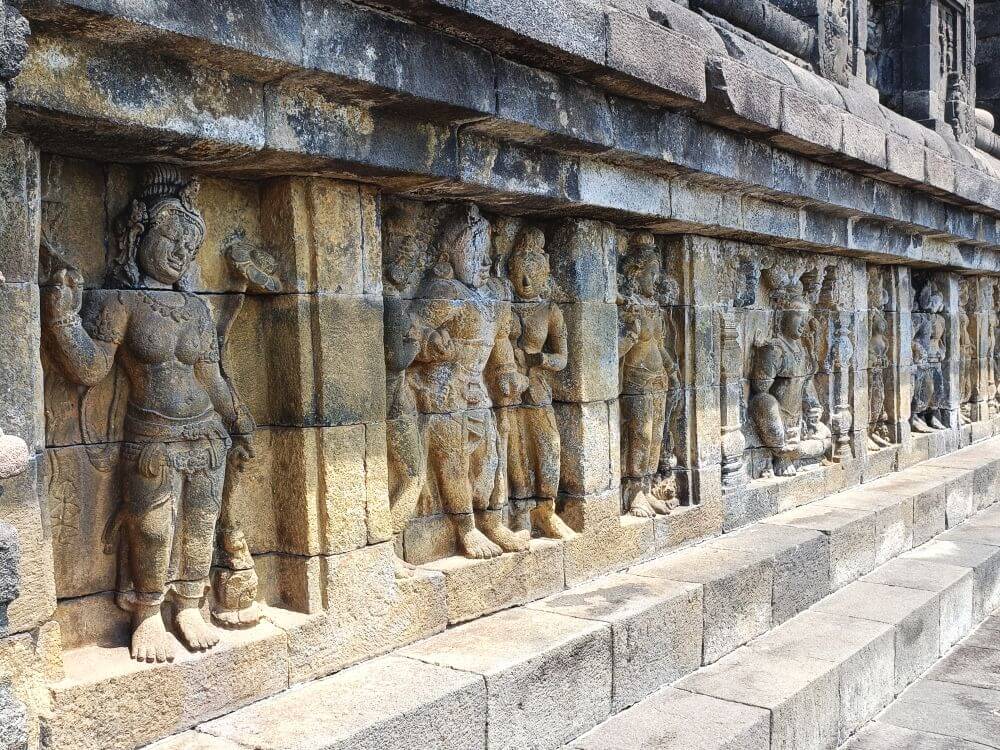
Decorated with 2,672 carved stone relief panels covering some 27,000 square feet, the temple originally included 504 Buddha statues Over the years, many of the statues have disappeared or lost their heads to looters.
Borobudur is a huge tourism draw, with the government currently targeting a goal of 2 million visitors per year.
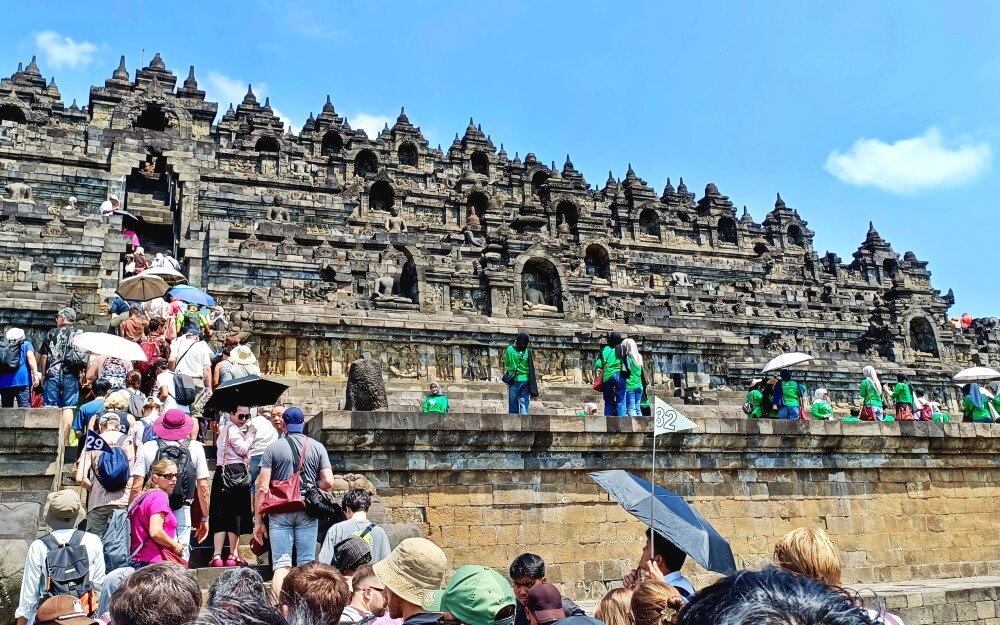
A victim of its own success
To prevent further damage to the aging stones, some stairs and stone walkways have been overlaid with wooden covers. In addition, all visitors are required to wear special sandals provided when they purchase a ticket to enter the complex.
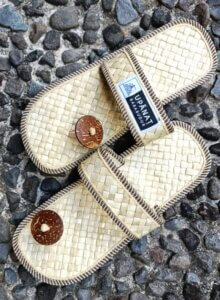
Admission to the temple itself is limited to 1200 people per day, with only 150 per hour shepherded through the complex by professional guides.
How to make a fun day of your visit
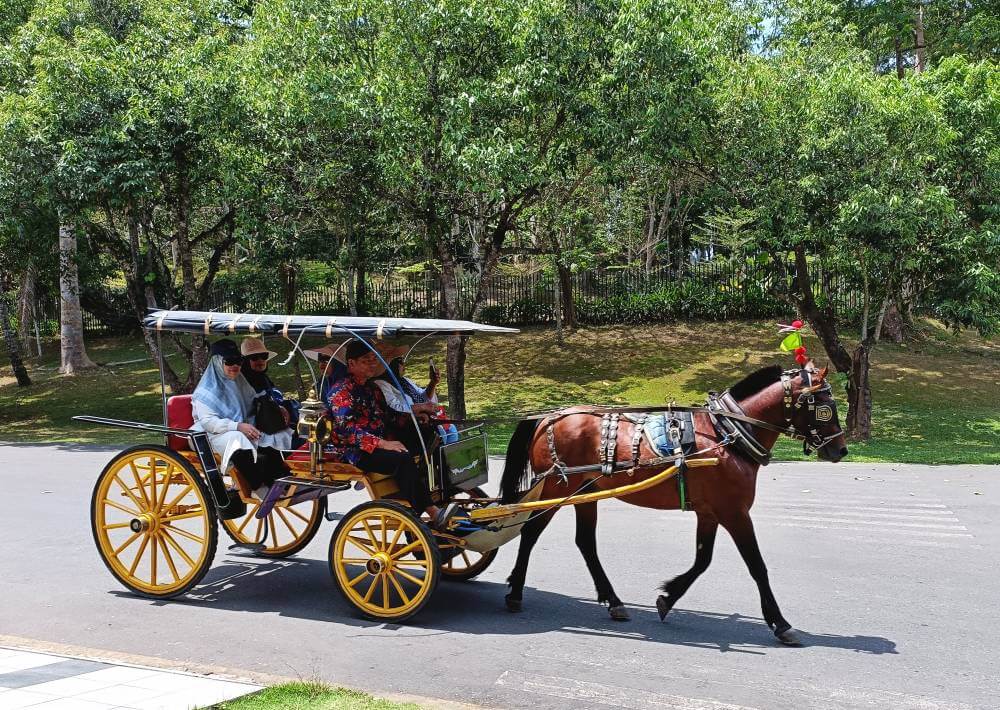
Visitors beyond that limit can tour an onsite museum with interactive displays, enjoy food and drinks at one of several open-air kiosks, roam the neatly groomed park grounds or ride in style in a horse-drawn carriage.
No visit to such a popular tourist site would be complete without one final opportunity to buy souvenirs. The exit route leads through a labyrinth maze of market stalls, loaded with all sorts of colorful merchandise.